Unlocking 90s Nostalgia: A Comprehensive Guide to the Arnold Friends Display Font
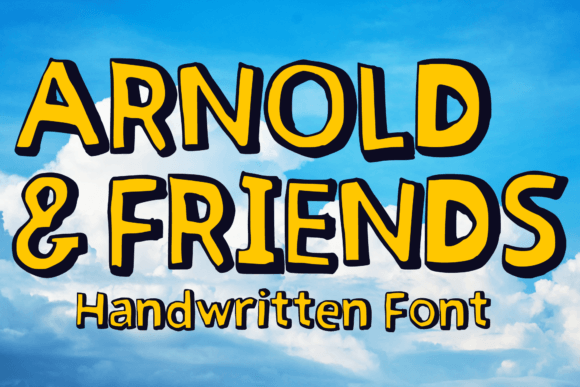
The visual landscape of graphic design is cyclical, constantly drawing inspiration from past eras to create fresh, engaging content for modern audiences. Currently, there is a profound resurgence in aesthetics rooted in the 1990s, characterized by bold colors, geometric shapes, and typography that exudes personality and playfulness. At the forefront of this retro revival is Arnold Friends, a fun 3D retro cartoon display font that has quickly become an essential tool for creators looking to capture the spirit of that decade. This typeface is not merely a collection of characters; it is a design element capable of transforming ordinary projects into vibrant statements that resonate with both nostalgic adults and younger generations discovering the era for the first time.
Understanding the utility and impact of a display font like Arnold Friends requires looking beyond its surface-level charm. It represents a specific stylistic choice that communicates energy, approachability, and creativity. Whether you are a professional graphic designer, a small business owner crafting a brand identity, or a hobbyist creating custom merchandise, the selection of typography can make or break a project. This article explores the characteristics, practical applications, and strategic advantages of integrating this unique 3D font into your creative workflow.
The Anatomy of a Retro 3D Aesthetic
To fully appreciate why Arnold Friends stands out in a crowded marketplace of typefaces, one must examine its structural DNA. Unlike standard sans-serif or serif fonts designed for long-form readability, display fonts are engineered for impact at larger sizes. Arnold Friends utilizes a distinct three-dimensional extrusion effect that mimics the hand-drawn lettering styles popular in 90s cartoons, arcade games, and comic books. The letters possess a bubbly, rounded quality that softens their appearance while the 3D depth adds a sense of weight and presence.
The "retro" designation is not accidental. The font captures the essence of an era where digital design was just beginning to merge with traditional illustration techniques. During the 1990s, designers often relied on manual shading and bold outlines to create depth before advanced rendering software became ubiquitous. Arnold Friends encapsulates this handmade feel within a digital format, offering the consistency of a vector font with the soul of analog art. The curvature of the glyphs suggests movement and fun, making it inherently unsuitable for serious, corporate documentation but perfect for anything requiring a spark of joy.
Furthermore, the versatility of the 3D effect allows it to interact dynamically with lighting and color. Because the font simulates depth, it responds well to gradient fills and shadow manipulation. Designers can easily customize the face of the letters to be one color while the extruded sides offer a contrasting shade, enhancing the pop-art vibe. This characteristic makes it a superior choice for projects that need to stand out in a visually noisy environment, such as social media feeds or crowded retail shelves.
Diverse Applications Across Creative Industries
The true value of a typeface is measured by its adaptability. Arnold Friends excels in this regard, serving as a versatile asset across a wide spectrum of design disciplines. Its ability to elevate a wide range of design projects to the highest level stems from its strong thematic identity, which can be leveraged in various contexts without feeling forced.
Apparel and Merchandise Design
One of the most prominent use cases for this font is in the realm of fashion and merchandise. The t-shirt industry, particularly within the streetwear and casual wear sectors, thrives on graphic-heavy designs. Arnold Friends is ideally suited for t-shirt designs that aim to evoke a sense of nostalgia or youthful energy. When printed on fabric, the bold strokes and 3D detailing remain legible and striking even from a distance. Beyond apparel, this font is exceptional for creating stickers. The cartoonish nature of the letters translates perfectly to die-cut vinyl, allowing creators to produce eye-catching decals for laptops, water bottles, and skateboards. The thick outlines inherent in the font's design ensure that stickers maintain their integrity even when scaled down to smaller sizes.
Branding and Logo Development
For businesses targeting a younger demographic or those wishing to position themselves as fun and accessible, logo design is a critical application. An amazing logo design often relies on a unique typographic signature that competitors cannot easily replicate. Arnold Friends offers this uniqueness. It is particularly effective for brands in the entertainment, food and beverage, toy, and education sectors. Imagine a local ice cream shop, a children's coding camp, or an indie game studio; each of these entities could utilize this font to instantly communicate their brand personality. The 3D aspect provides a ready-made emblematic quality, reducing the need for excessive additional iconography.
Publishing and Editorial Layouts
In the world of publishing, first impressions are everything. Magazine or book covers demand typography that grabs attention immediately. A title set in Arnold Friends signals to the reader that the content within is likely humorous, adventurous, or related to pop culture. This makes it an excellent choice for comics and graphic novels, where the text needs to harmonize with illustrated artwork. The font's style complements hand-drawn cartoon drawings, creating a cohesive visual language between the lettering and the imagery. Editors and art directors can use this font to break up the monotony of standard headlines, injecting a dose of personality into editorial spreads that discuss trends, lifestyle, or entertainment.
Strategic Implementation for Maximum Impact
While Arnold Friends is a powerful tool, its effectiveness depends on how it is implemented. Using a display font requires a different strategy than using body text fonts. To get the most out of this typeface, designers should consider the following practical approaches:
- Pairing with Complementary Typefaces: Because Arnold Friends is so distinctive and decorative, it should generally be paired with a simple, clean sans-serif or serif font for secondary information. Using it for body text would reduce readability and overwhelm the reader. Let the 3D font shine as the headline or focal point, while a neutral font handles the details.
- Color Experimentation: The 3D structure of the font invites color play. Designers should experiment with high-contrast color combinations. Neon greens against deep purples, or bright yellows against electric blues, can enhance the 90s theme. Gradients applied to the face of the letters can simulate metallic or glossy plastic textures, adding another layer of realism.
- Contextual Framing: To maximize the "cool touch" this font adds to designs, consider the surrounding elements. Adding halftone patterns, starbursts, or jagged shapes in the background can reinforce the retro comic book aesthetic. However, restraint is key; ensure the background does not compete with the complex geometry of the 3D letters.
- Scaling for Legibility: As with all display fonts, Arnold Friends performs best at larger sizes. Avoid using it for small captions or fine print. Ensure there is adequate breathing room around the characters so the 3D extrusion does not blur or clash with adjacent elements.
The Psychological Appeal of Nostalgic Typography
Why does a font like Arnold Friends resonate so deeply with a broad audience? The answer lies in the psychology of nostalgia. For professionals and consumers who grew up in the 1990s, seeing this style of typography triggers positive emotional associations with childhood, simpler times, and the vibrant pop culture of that era. It evokes memories of Saturday morning cartoons, video arcades, and colorful packaging.
For younger audiences who did not experience the 90s firsthand, this aesthetic represents a curated, idealized version of the past. It feels authentic yet novel, offering a break from the sleek, minimalist, and often sterile design trends that have dominated the tech industry for the last decade. By utilizing Arnold Friends, creators tap into a universal desire for fun and whimsy. It humanizes brands and projects, making them feel less corporate and more community-oriented.
Educators and researchers studying visual communication can observe how such fonts influence engagement. In educational materials for children, the friendly, non-threatening shape of the letters can make learning materials appear more inviting. In marketing, it can lower the barrier to entry for a consumer, making a product seem more accessible and less intimidating.
Future-Proofing Designs with Timeless Fun
Trends may come and go, but the core appeal of well-executed character design remains constant. While the specific "90s theme" is currently trending, the underlying qualities of Arnold Friends—clarity, boldness, and personality—are timeless. A design created today with this font will not necessarily look dated in five years; rather, it will look like a deliberate stylistic choice. The 3D cartoon style has roots that extend back to mid-century advertising and forward into modern motion graphics.
Moreover, the adaptability of this font ensures its longevity. As design tools evolve, allowing for more complex animations and interactive web elements, a 3D font like Arnold Friends is poised to thrive. It can be easily rigged for animation, extruded further for 3D modeling software, or textured for virtual reality environments. For business owners and creators investing in their visual assets, choosing a font with this level of dimensional potential is a smart long-term decision.
In conclusion, Arnold Friends is more than just a download; it is a gateway to a specific mood and aesthetic that continues to captivate audiences worldwide. Its capacity to transform stickers, t-shirt designs, logo designs, and comics makes it an indispensable resource in the modern designer's toolkit. By understanding its characteristics and applying it with strategic intent, creators can produce work that is not only visually stunning but also emotionally resonant. Whether you are looking to add a cool touch to a personal project or redefine a brand's visual identity, this fun 3D retro cartoon display font offers the perfect blend of nostalgia and contemporary flair.